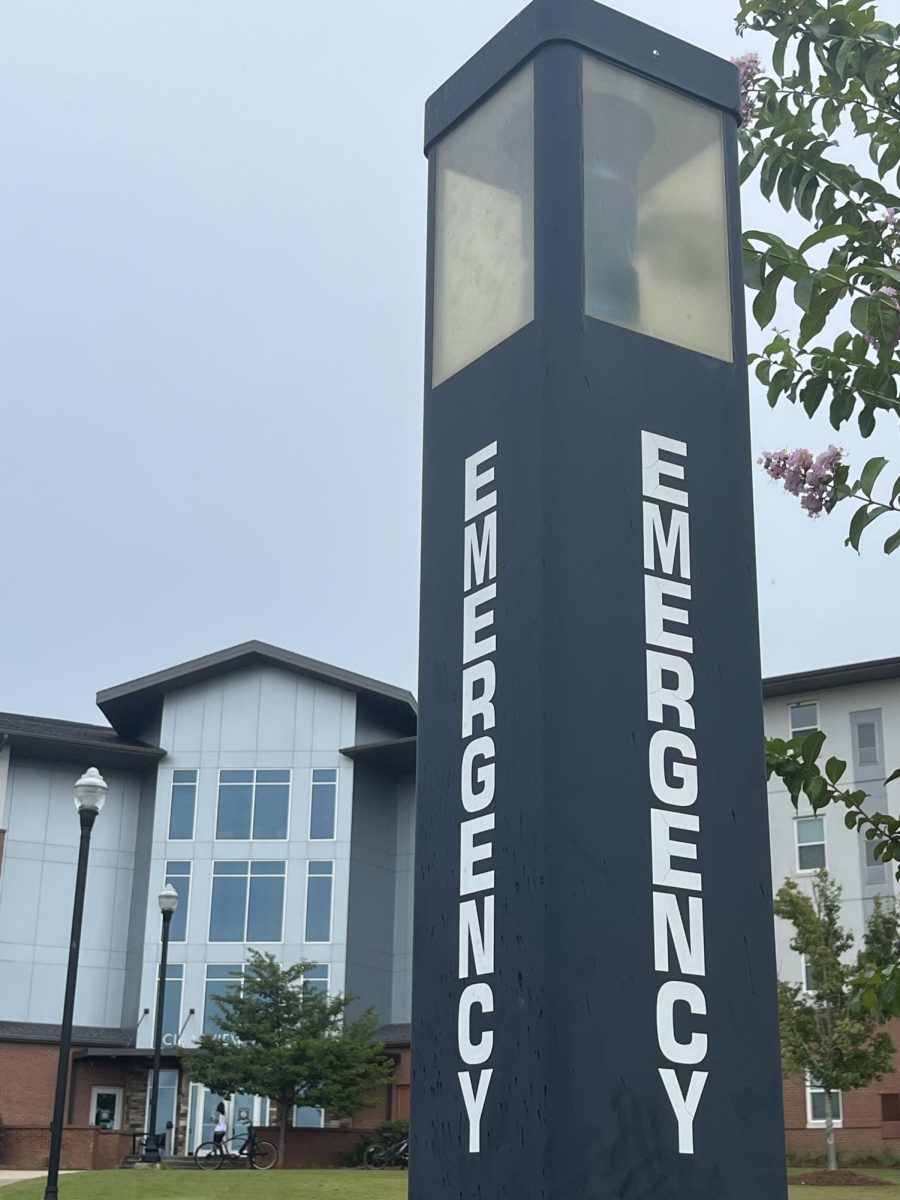


On October 23rd, Police Chief Debra Kennedy, with Lieutenant Jamie Bailey, came to a press conference in Professor Miller’s River class. There, students and the Uproar were able to ask questions pertaining to issues of safety and how the police department operates as a whole.
Chief Kennedy was able to highlight some of the major tenants of leadership she plans to embody during her tenure as Chief of Campus Police, as well as provide some background on herself.
Chief Kennedy is from Columbus, Georgia, and went to Columbus State University in the 90s, back when it was called Columbus College. She obtained her undergraduate degree in Criminal Justice, and her graduate degree in Public Administration with an emphasis in Justice Administration. She has previously worked 33 years at the Columbus Police Department, working in several different units and divisions from homicide to sex crimes.
Kennedy stated that Columbus is “home” to her, and that–along with her familiarity with the campus–was a core reason for her accepting the position. However, she was also inspired by the mission stated by leadership.
“I felt like their mission and my values correlated,” she told students.
Kennedy went on to describe four major objectives that, along with safety, she wishes to address as Police Chief: Retention and recruitment, heightened readiness for active threats, achieve state certification, and enhance campus visibility.
One example of the campus police increasing visibility and communication with the student body was a campus safety walk hosted alongside the Student Government Association on September 9th. They also participated in Halloween activities, such as the campus’ own Trunk or Treat event.
“I think it’s a good start,” Chief Kennedy answered when asked by a student about how she thought it went. “We attend the SGA meetings, and I think by building those relationships, you build trust, and when you build trust, people feel more comfortable talking to you about subjects that they wouldn’t just talk to an officer that they have not built that trust with.
“So I think it’s a good first step, and we did identify some areas that need to be addressed, but there’s still a lot of work to do.”
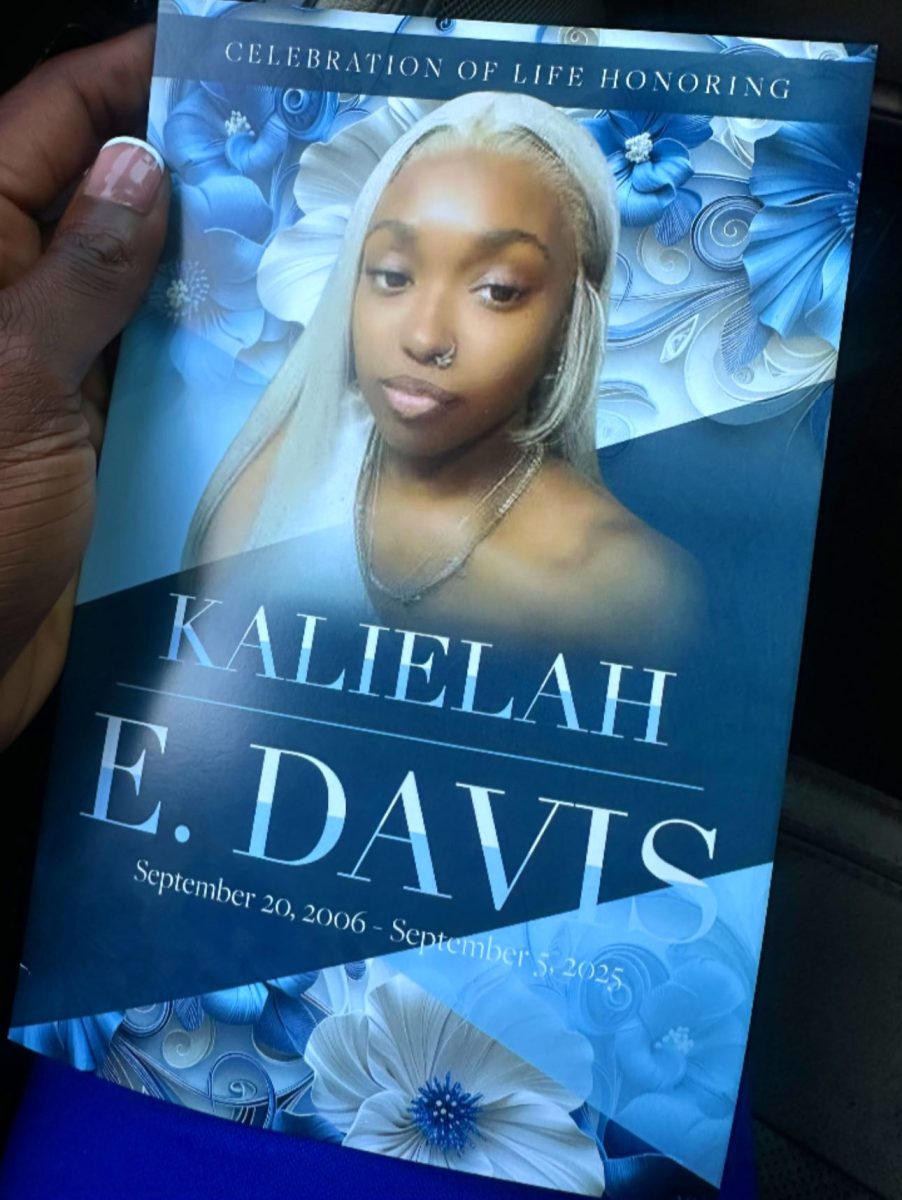
Students specifically asked about safety in the downtown campus. While no specific incident was named during the press conference, there have been incidents downtown that have rattled the student body, such as a student being assaulted in a downtown parking garage, and the tragic death of Kalielah Davis .
Kennedy stated that many of her goals, specifically with retention and recruitment, will help maintain and foster safety. She also emphasized the power of an app being heavily recommended by campus police: the Rave Guardian app.
The Rave Guardian app is available on both the Apple App Store and Google Play Store. It hosts a variety of safety-related features, such as sending anonymous tips, and–as Lieutenant Bailey mentioned during the conference–the ability to have “virtual escorts”.
“We have met with Uptown, which is a business that deals with all the issues and events in Uptown. We have met with our law enforcement partners that are in that area,” she went on.
“A lot of areas down there, like the parking garages, they’re owned by the city. Some of them, we have spaces that we lease,” Kennedy said, “but if there are lights that are out or if there’s issues that we identify, what I’ve been told in the past is that there’s a delay in getting those things fixed. So we begin having conversations with the right people in the city to make sure, when there’s an issue that’s been identified, those issues are fixed in a timely manner. I feel like we made a lot of traction in that area, moving in the right direction.”
Kennedy pointed out once more that relationships are a core part of her job, along with resource management.
“One of the things I think we do really, really well is we have really strong relationships with several of the key businesses downtown. And so they work with us.” Kennedy mentioned that many of these businesses have their own camera systems.
“A lot of times we can utilize their resources to help us with something that has already happened, or help us prevent something that might happen.
Along with these businesses, campus police also maintain communication and contact with the “Columbus Police Department, Muscogee County Sheriff Department, Muscogee County School District, and Columbus Tech police.”
Lieutenant Bailey added on, imploring students to trust their instincts and call when they feel that something is amiss.
“I know there’s a lot of times we go out to calls and someone will say, ‘I didn’t know if I should call because this may sound a little silly,” but please, if y’all see something, and if you get a hunch that it’s out of the norm, please call us,” Bailey implored. “There’s never a call that’s never too silly for us, we take every call seriously.”
Kennedy described the campus police as being “victim-centered” and “trauma-informed”. Bailey also highlighted the need for engagement in university police work when interacting with the student body.
“While we’re walking around, if we say ‘Hey’, it’s not to bother you guys,” Bailey said, “it’s because we want to talk to you. That’s very important to us. We want to know who are students are and what’s going on.”
Like Kennedy, he explained that being open with the student body and building a sense of approachability rather than simply just “mean-mugging” allows for students to feel more comfortable talking to the campus police. Bailey also mentioned wanting to maintain police presence at student activities and affairs–not just to maintain security, but to be an active part in them.
“We want to build that bridge with each other. So, if there’s events that y’all come up with, I want y’all to think, ‘Hey, CSU police department definitely wants to be a part of that, let’s get in contact with them.’ We don’t want y’all to think that as an afterthought–’Okay, we need them here for security.’ No, we also want to be a part of that event.”
Overall, the two speakers highlighted the intent of campus police to become more involved in the campus community, to recruit and retain more officers to increase their presence on campus, and to foster a sense of approachability and community between the student body and the police department.
“It was a good opportunity for me to really understand what the campus police do and what to do for us,” Roo Worley, a student in Professor Miller’s class, told the Uproar. “It felt very informative. I feel a lot safer knowing that there are people who are very headstrong about wanting to keep our community safe.”